

Tree Survey Services Across Norfolk & Norwich
Whether you have concerns about a leaning tree, visible signs of decay, storm damage, or you need a report for planning purposes, you will receive a thorough assessment of the tree's condition with clear, practical recommendations.
If your project also needs an ecology survey, that is separate work and we can point you to 360 Ecology Ltd.

Which survey do you actually need?
Two different pieces of work get confused regularly, and some sites need both.
Tree safety and condition surveys. These look at the tree itself: structure, decay, stability, and the risk it poses to people and property. Carried out by qualified arborists. This is what Arborpro does, and it is what the rest of this page covers.
Ecology surveys. These look at wildlife and habitat: whether protected species are present on the site and what your project has to do about them. Carried out by qualified ecologists, and legally distinct from arboricultural work. Arborpro does not carry these out. 360 Ecology Ltd does.
A leaning oak next to your driveway needs the first. A planning application on a plot with mature trees may well need both.
Are You Concerned About the Safety or Condition of a Tree?
A tree can appear perfectly healthy while hidden defects develop beneath the bark or below ground. Decay, disease, root damage and structural weaknesses are not always visible until they become a much larger problem.
A professional tree survey provides an informed assessment of the tree's condition before issues become more serious.
The inspection identifies potential risks, records the overall health of the tree and explains whether any action is recommended.
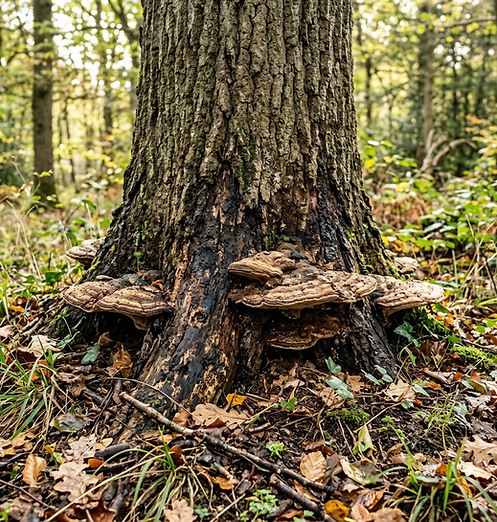
Many people arrange a survey after noticing dead branches, cracks in the trunk, fungal growth, excessive leaning or changes following strong winds.
Others require a report to support insurance enquiries, property purchases, planning applications or ongoing maintenance.
What Is a Tree Survey Report?
A tree survey report is a detailed arboricultural assessment carried out by a qualified arborist to evaluate the condition, structure and safety of trees on your property. It covers the trees themselves. Protected species and habitat fall under an ecology survey, which is separate.
The report typically includes:
-
Tree species identification
-
Tree height and dimensions
-
Structural condition assessment
-
Signs of decay, disease or damage
-
Risk of branch or tree failure
-
Recommendations for pruning, removal or further investigation
-
Photographs and location details where required
-
Guidance for planning or development projects
When should you consider tree survey services?
Trees often show warning signs before they fail.
Common reasons to arrange a tree survey include:
-
A tree appears to be leaning more than before
-
Large branches have recently fallen
-
Fungi are growing around the base or trunk
-
The tree is close to a house, road or public footpath
-
You are buying or selling a property
-
Planning permission requires a tree report
-
Storm damage has affected the tree
-
You are concerned about roots affecting buildings or drains
-
A neighbour has raised concerns about a boundary tree
Early assessment can help prevent costly damage and reduce the risk of unexpected tree failure.

What Does a Tree Surveyor Look For?
A tree survey is much more than a quick visual inspection. Every assessment considers the tree from the roots to the crown, looking for signs of weakness, instability, disease and declining health.
Root and Base Inspection
The base of a tree often provides valuable information about its stability. Signs such as soil movement, exposed roots, cavities, root damage or fungal fruiting bodies can indicate structural concerns that require closer investigation.
Trunk Assessment
The trunk is examined for cracks, cavities, decay, bark defects and other structural issues. Weaknesses within the main stem can affect the tree's ability to withstand strong winds and poor weather.
Branch and Crown Evaluation
Deadwood, split branches, poor branch unions, excessive weight and signs of disease are assessed throughout the canopy. The inspection considers whether pruning or other management work may help reduce future risk.
Overall Tree Health
Leaf condition, seasonal growth, pest activity and visible symptoms of disease all contribute to the overall assessment. Looking at the whole tree provides a clearer understanding of its current condition and future management needs.
Who needs tree survey services?
Tree surveys are not only required for large developments or commercial land. They provide valuable information for anyone responsible for managing trees safely. You may benefit from a professional survey if you are:
A homeowner concerned about a mature tree
Buying or selling a property
Planning an extension or new building
A landlord responsible for tenant safety
Managing commercial premises
Responsible for schools, churches or public spaces
Preparing information for a planning application
Responding to an insurance request following storm damage
Planning building work near trees?
Having accurate information at the beginning of a project can reduce delays, avoid unnecessary redesign costs and support a smoother planning process.
Trees affected by proposed works
Root Protection Areas
Trees that are suitable for retention
Trees that may require management
Potential conflicts between construction and existing trees
Recommendations to support planning applications
Worth knowing: since November 2023, most planning applications in England must also demonstrate a minimum 10% biodiversity net gain. That is measured by an ecologist, not an arborist, so it sits outside a tree survey. If your application needs it, 360 Ecology Ltd handles biodiversity net gain assessments alongside preliminary ecological appraisals and protected species surveys.
What if you are worried a tree might fall?
One of the most common reasons people arrange a tree survey report is because they are worried about a tree becoming unsafe. A tree that is leaning, has visible decay, has suffered storm damage or is growing close to a property can naturally cause concern.
Not every leaning tree is dangerous, but some trees can become hazardous without obvious warning signs. A professional inspection considers the condition of the entire tree before any recommendations are made.
During the assessment, attention is given to:
Structural condition
Extent of decay
Previous storm damage
Likelihood of failure
Root stability
Crown balance
Branch attachments
Potential impact if failure occurs
Receiving professional advice provides reassurance and helps you make informed decisions based on the condition of the tree rather than uncertainty.

Why choose Arborpro for tree survey services in Norfolk?
Arborpro combines practical tree surgery knowledge with professional arboricultural assessment, providing detailed reports that help you understand exactly what is happening with your trees. Every inspection is carried out with care, attention to detail and a commitment to providing honest recommendations appropriate for your circumstances.
Local Knowledge
Trees growing across Norfolk experience different conditions depending on soil type, exposure, age and surrounding land use. Understanding these local conditions helps identify common issues and supports more accurate, practical recommendations.
Trunk Assessment
Tree inspections are completed by experienced professionals with extensive knowledge of tree biology, structural defects, disease identification and tree risk assessment, combined with years of practical tree surgery experience.
Clear and Detailed Reports
Tree reports are written in straightforward language that is easy to understand. You will receive a clear explanation of findings, any concerns identified and recommendations for future management. Clarity over technical jargon.
Practical Advice You Can Trust
Every recommendation reflects the condition of the individual tree and its surroundings. Where work is recommended, you will understand why it is needed, whether it is urgent and what options are available.
How long does a tree survey take?
The time required depends on the number of trees, their size and the complexity of the site. A single residential tree inspection may take less than an hour, while larger gardens, commercial properties and development sites can require more detailed surveying and reporting.
Following the inspection, the findings are carefully reviewed before being compiled into a written report.
Your report explains:
The condition of each tree inspected
Any defects or areas of concern
The level of risk where appropriate
Recommended maintenance or management work
Any further investigations if required
Areas covered
Arborpro provides tree survey services throughout Norwich and across Norfolk:
Norwich
Wymondham
Thetford
South Norfolk
King's Lynn
Dereham
Cromer
Fakenham
Watton
Great Yarmouth
Diss
North Norfolk
Broadland
Attleborough
Aylsham
Holt
Swaffham
Surrounding towns and villages across Norfolk
Why our Norfolk clients trust us
When searching for Norfolk Tree Surgeons, experience and qualifications matter. Every member of the team understands that you're trusting somebody to work around your home, your business, or valuable public spaces.
30+ years family-run
Years of practical experience allow informed decisions to be made on the safest and most appropriate solution for every job.
Qualified professionals
SafeContractor Approval reflects a commitment to maintaining high standards of health, safety, and compliance across every project.
Recognised standards
Arborpro operates to BS3998 quality standards, providing reassurance that work is completed using recognised best practice.
Fully insured
£5,000,000 public liability insurance together with £10,000,000 employers' liability insurance on every job.
We can also offer Ecology Surveys backed by 360 Ecology Ltd
Some projects need more than a tree report. If your site could support protected species, or your planning application requires biodiversity net gain, you will need a qualified ecologist rather than an arborist.
Arborpro works alongside 360 Ecology Ltd, an independent ecology consultancy based on the Norfolk and Suffolk border and a CIEEM Registered Practice. They cover preliminary ecological appraisals, protected species surveys including bats, badgers, reptiles, great crested newts and otters, and biodiversity net gain assessments.
Survey windows for many protected species are seasonal, so it is worth raising this early rather than close to a deadline. Mention it when you get in touch and we will make the introduction.